JEE Main & Advanced
Physics, chemistry and mathematics taught through connected concepts, guided problem solving and regular practice.
See the JEE pathwayThoughtful JEE, NEET and CBSE preparation in Jaipur—built around clear concepts, steady practice and a real understanding of each student.
For students and families who value progress over promises.

Different goals call for different rhythms. Start with a programme that fits your stage, then make a plan with a mentor.
Physics, chemistry and mathematics taught through connected concepts, guided problem solving and regular practice.
See the JEE pathwayBuild a dependable base in biology, physics and chemistry with structured revision and question discussions.
See the NEET pathwayStrengthen school concepts, prepare thoughtfully for assessments and develop study habits that last.
See the CBSE pathwayClear explanations pair with visual thinking, worked examples and opportunities to practise. Subject diagrams make complex ideas easier to explore.
Connect a diagram, the quantities in a question and the physical idea before choosing a formula.
Use precise vocabulary, linked structures and short recall prompts to make revision active.
Relate symbols and patterns to the underlying idea, then apply it in a new problem.
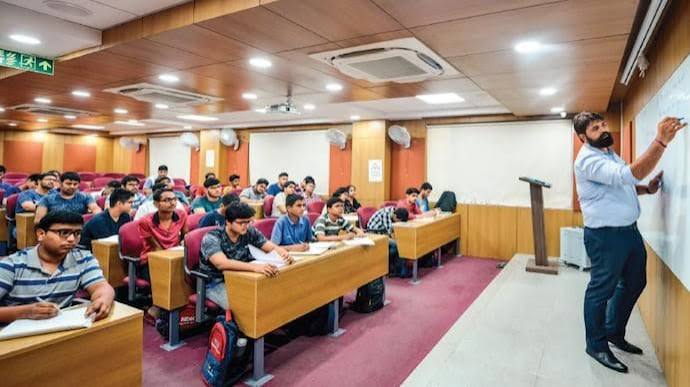
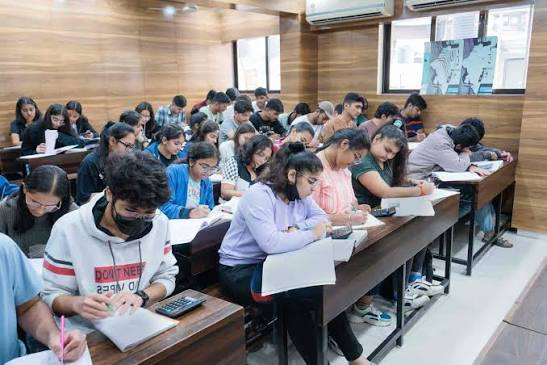
A calm, well-equipped classroom gives students room to listen, ask questions, practise independently and review what they have learned. Our programme details and campus information should be confirmed with the institute before visiting.
Learn about our approach
We want students to leave each class knowing what clicked, what needs work and how to move forward. Lessons connect the “why” to the “how,” then make time for useful feedback.
A possible session structure—not a promised timetable—shows how explanation, practice and reflection can work together.
Recall one idea from the previous lesson and name the question to work on today.
Unpack a concept, compare approaches and make room to ask why a step works.
Practise a related question, then use feedback to decide what to revisit next.
Session timings and format vary by course and batch. Contact the academy to confirm current schedules.
Explore the subject areas covered by the teaching team, along with the coaching approach used for clear explanations and individual support.
Meet the facultyConsistent communication can help students and families stay focused on goals, progress and the next useful step.
Bring questions to class, practise new approaches and ask for help when a topic needs another explanation.
Stay part of the learning conversation with clear goals, study routines and regular check-ins.
Ask about the right class, schedule or learning support for your student.